Sun Youth Community & Sports Center: A Flagship Sustainable Construction Project
3 min.
A place designed to strengthen the Montreal community
Since 1954, the organization Sun Youth has played an essential role in Montreal’s social fabric. Each year, it supports more than 30,000 people through a wide range of services, from food assistance to social integration, as well as sports, education, and community support.
To continue its mission under optimal conditions, the organization undertook the construction of its own community house—an inclusive and accessible living environment bringing all its services together under one roof.
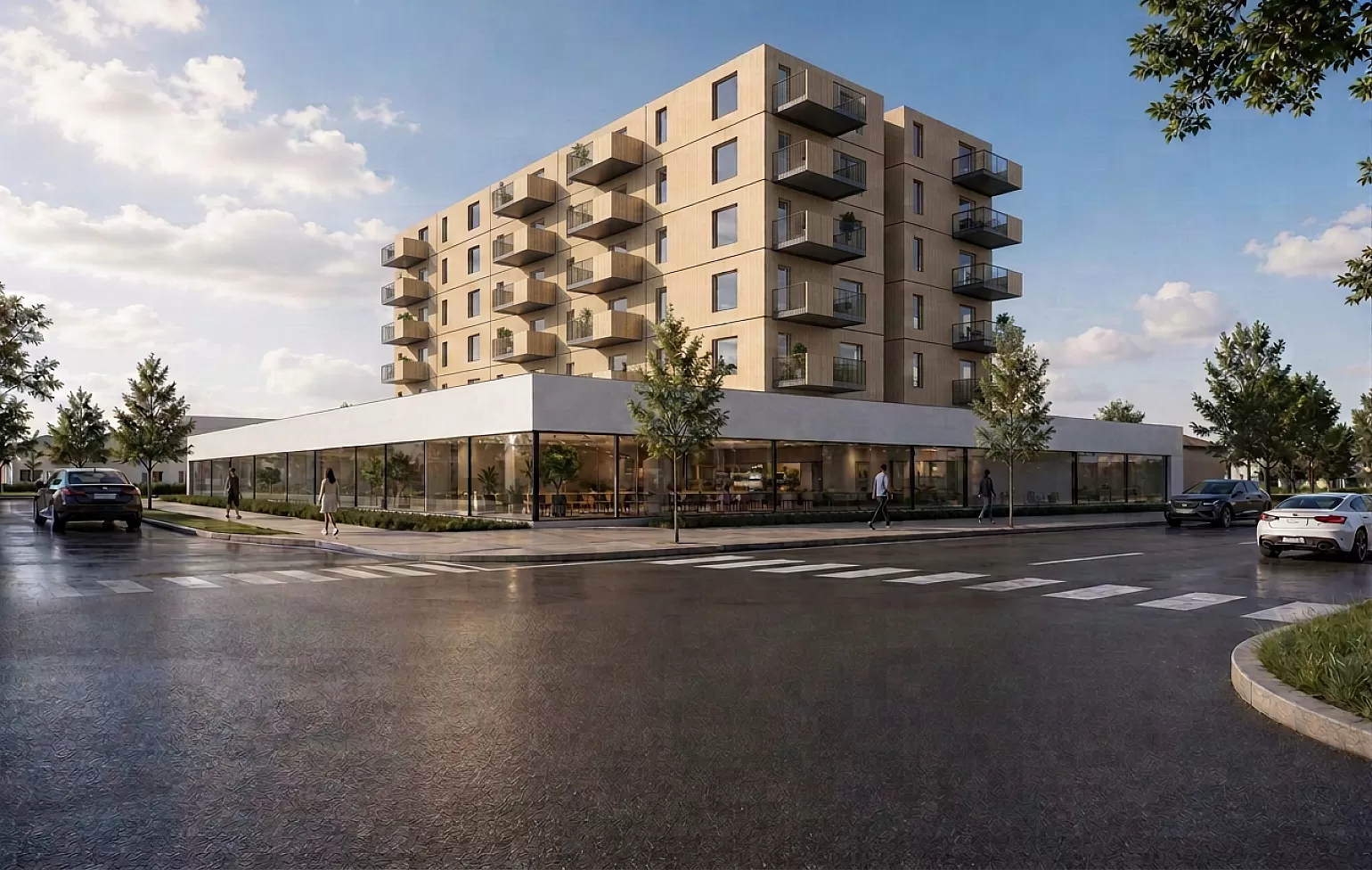
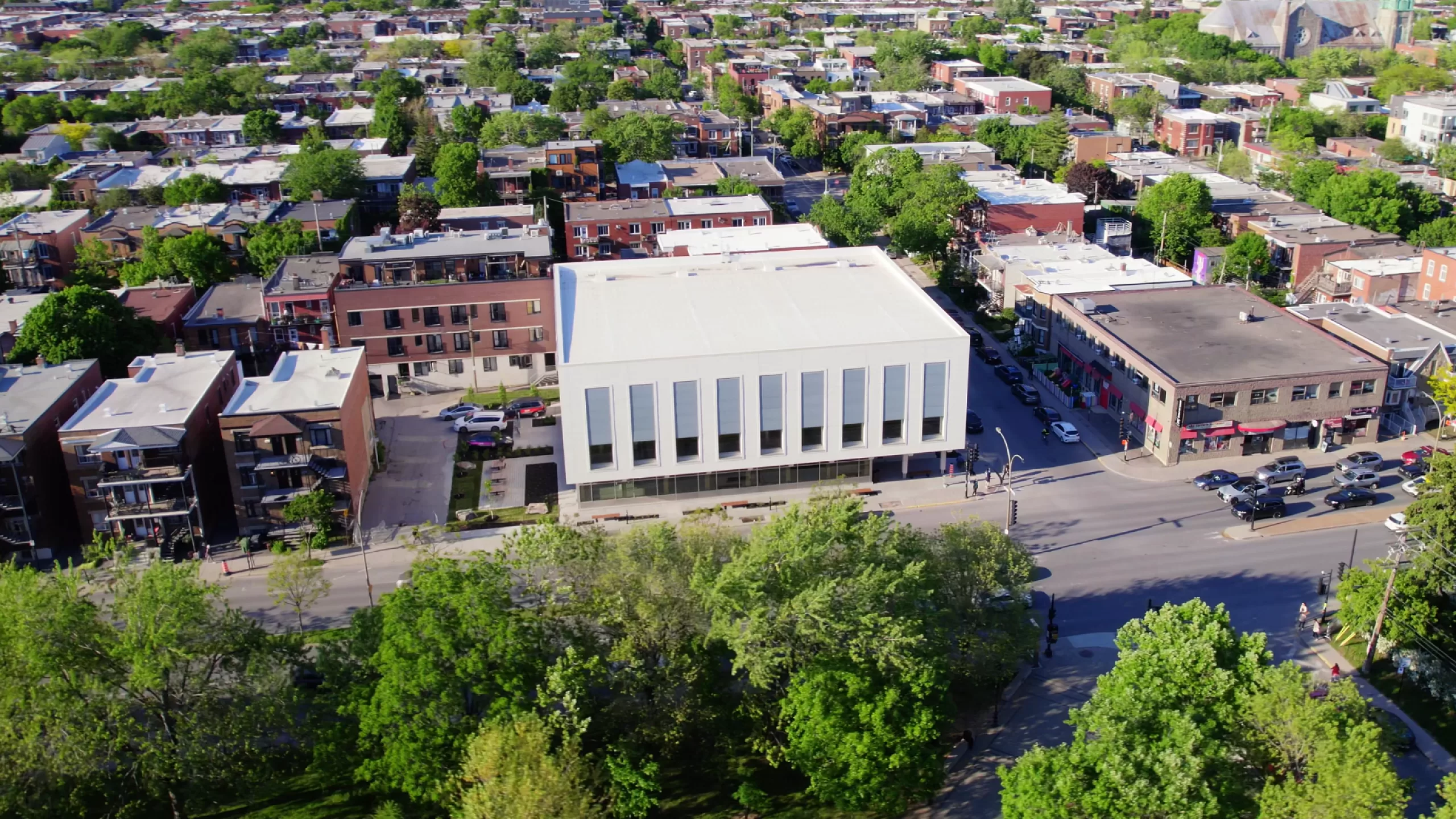
The building, with a surface area of approximately 40,000 sq. ft., is spread over three levels and is integrated directly into the heart of the neighborhood, near Jarry Park and just steps from De Castelnau metro station.
This new community center, officially inaugurated on June 16, 2026, marks a major milestone in the organization’s history.
An exemplary social project
The project aimed to build a multifunctional community center designed as a social model addressing the real needs of the community. It notably includes:
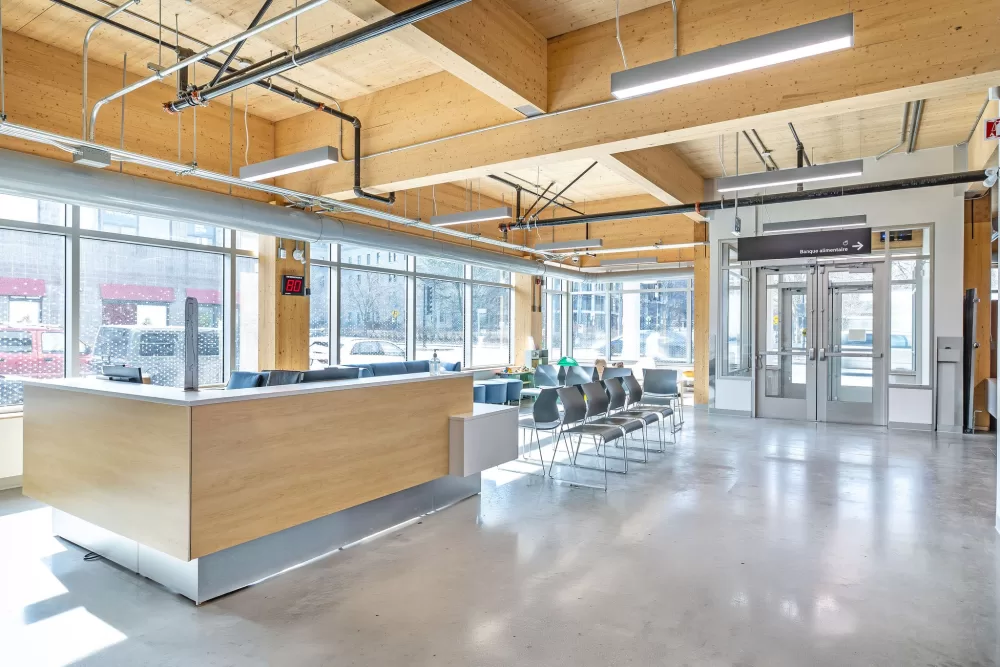
- A grocery-store–style food bank
- Reception and meeting spaces
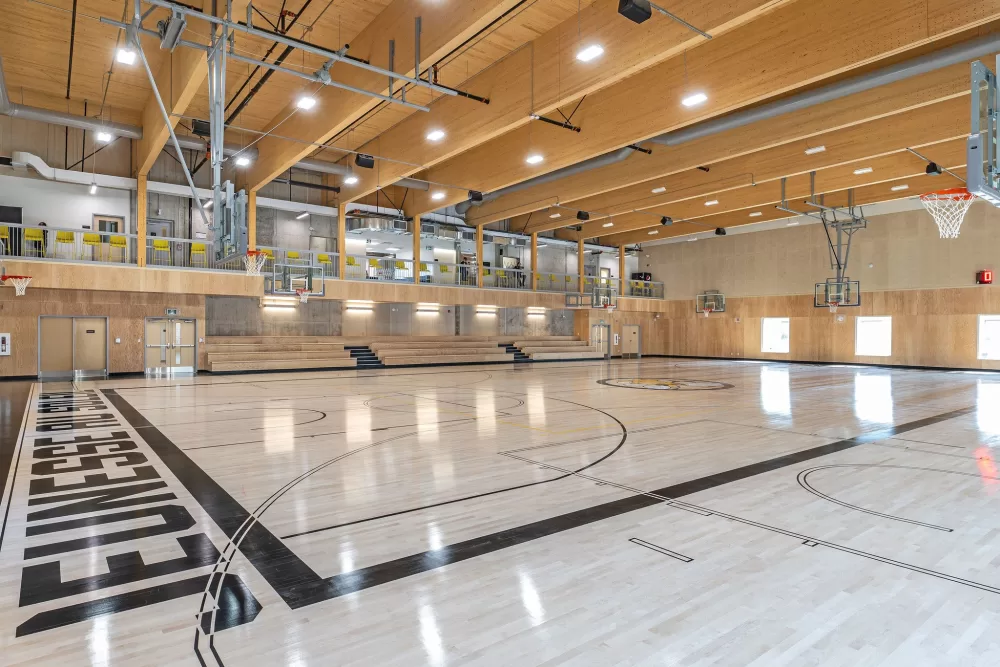
- A gymnasium and changing rooms
- Multipurpose rooms (arts, dance, music, martial arts)
- A study and tutoring room
- A community kitchen and cafeteria
- A clothing distribution center
- Multipurpose spaces dedicated to the community
More than just a building, it is a true social ecosystem designed to promote inclusion, dignity, and well-being.
A sustainable performance, a carbon-zero ambition
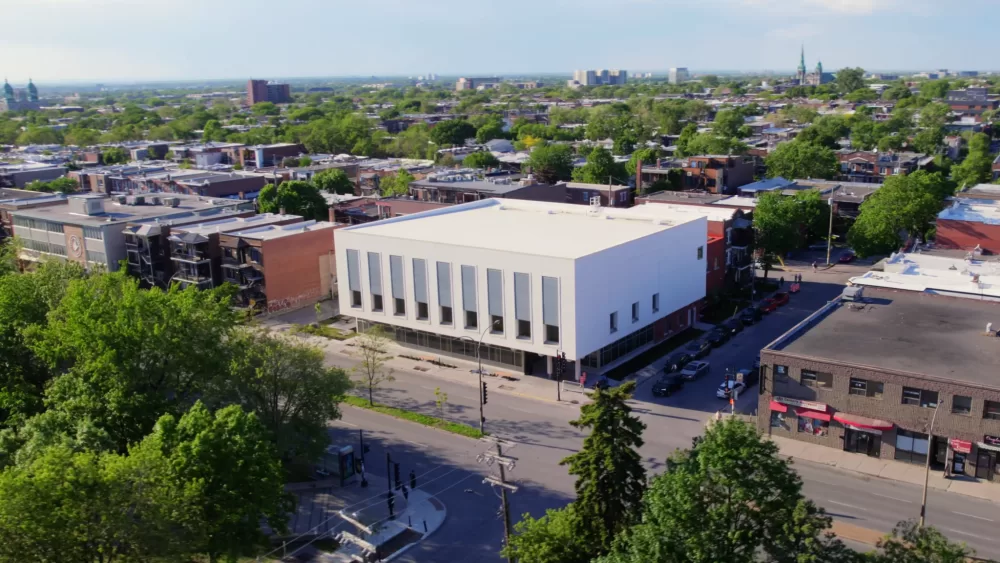
Beyond its social purpose, the project also aimed to be a model of environmental responsibility. From the design stage by BPA, it was developed in accordance with the Zero Carbon Building (ZCB v3) certification requirements from the Canada Green Building Council (CAGBC), while drawing on LEED principles to maximize environmental performance.
The goal was clear: achieve carbon neutrality while ensuring a high level of comfort and energy efficiency. The targeted outcomes were significant:
- 54% reduction in energy consumption (2017 NECB baseline)
- 54% reduction in greenhouse gas emissions
- 42% reduction in potable water consumption
Here are some of the strategies implemented to support this ambitious environmental approach, aligned with Zero Carbon Building (ZCB) principles:
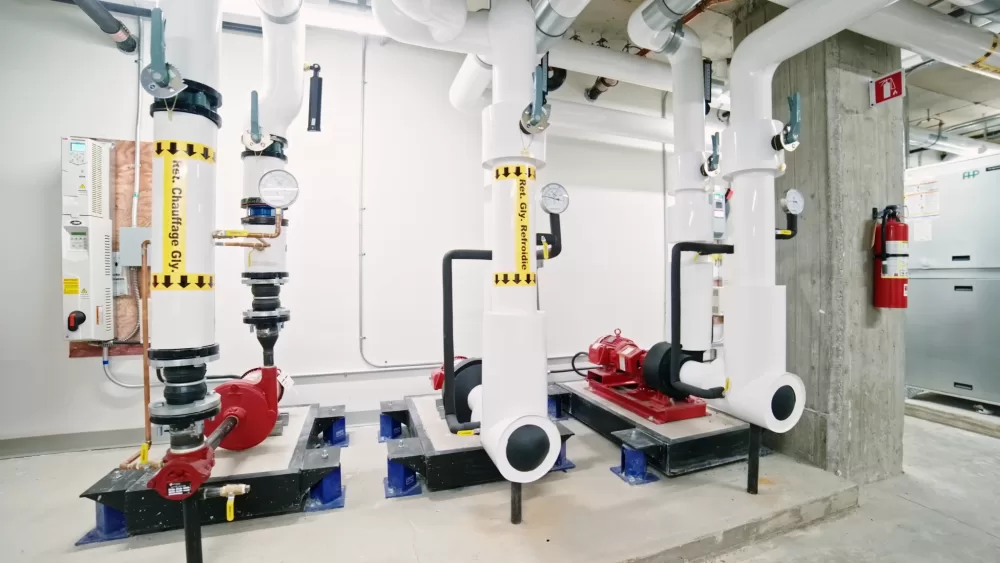
100% geothermal system for heating and cooling
The building is fully powered by a geothermal system, a solution still rare at this scale in the industry. The geothermal wells, integrated directly beneath the site, significantly reduce reliance on fossil fuels. The innovative design is based on four-pipe geothermal heat pumps, allowing simultaneous heating and cooling to meet building demands. This system also enables energy to be rejected back into the geothermal field during peak periods, thereby optimizing overall building efficiency. An auxiliary electric boiler provides redundancy and ensures operational continuity. In addition, counterflow heat recovery units preheat incoming outdoor air with high efficiency, reaching up to 90% in winter and around 80% in summer. This strategy directly contributes to reducing the building’s overall energy demand.
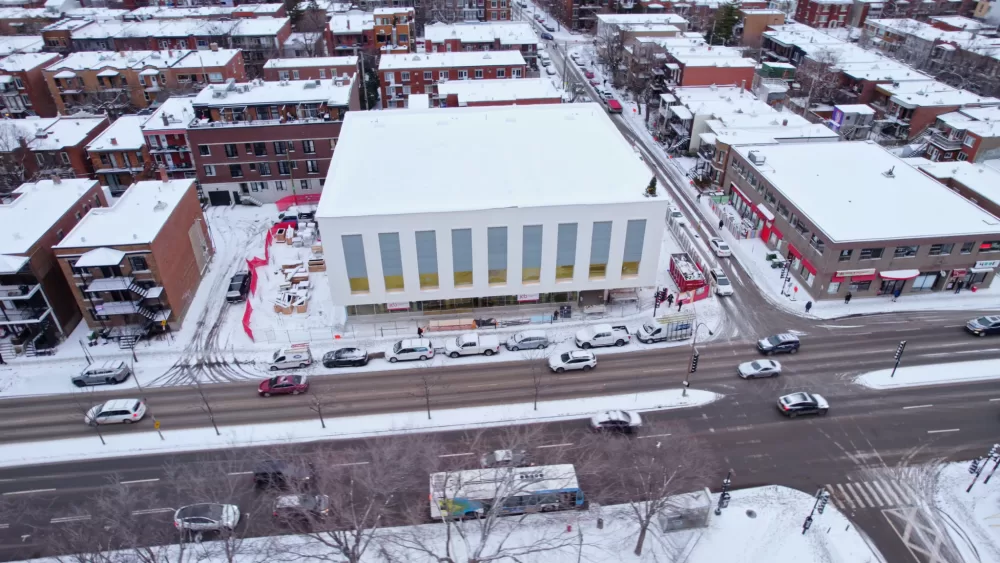
Solar energy, smart storage, and optimized comfort
Photovoltaic panels integrated into the façade along Saint-Laurent Avenue by Repentigny Électrique enable on-site energy production. Designed in a beige tone that blends with the architecture, they enhance energy performance while preserving the building’s aesthetic quality. The electricity generated is stored in a battery bank to reduce reliance on the hydroelectric grid. In addition, high-induction architectural ducts provide ventilation, heating, and cooling for community spaces, combining energy efficiency, thermal comfort, and indoor air quality.
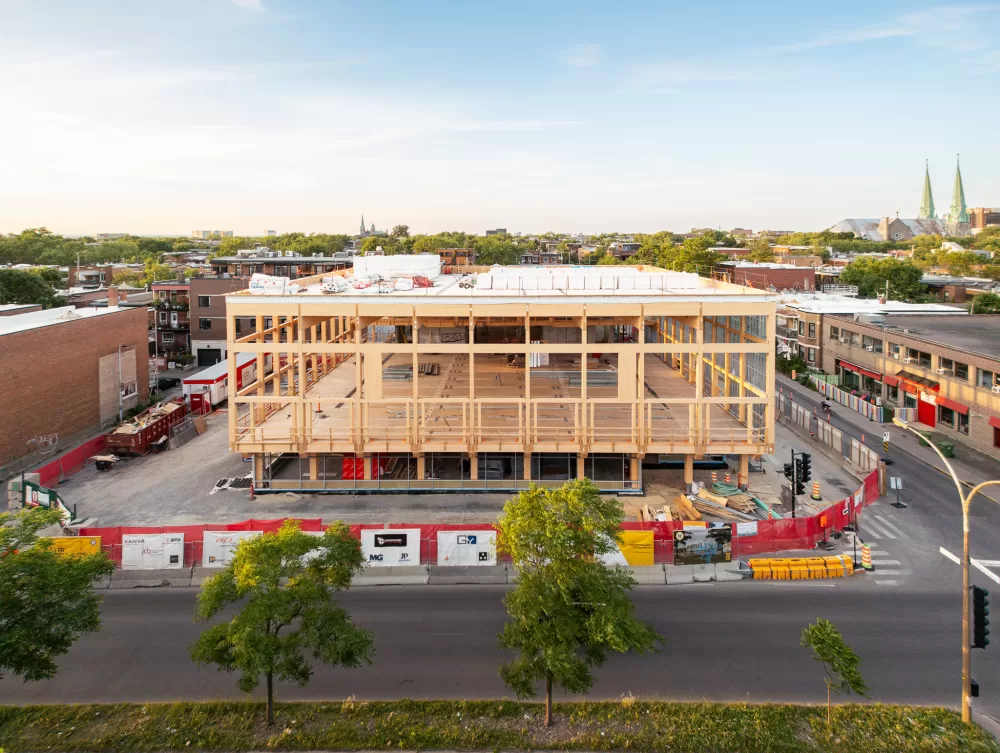
Mass timber structure
Produced and installed by Nordic Structures, the glulam mass timber structure is fully aligned with the project’s goal of reducing the building’s carbon footprint. As a renewable material, wood both stores carbon and reduces the environmental impacts associated with the production of concrete and steel.
In this project, the structure is largely left exposed, creating a warm and biophilic atmosphere while also accelerating the schedule through off-site prefabrication. Structural elements—including gymnasium beams spanning up to 90 feet—were fully prefabricated and assembled off-site due to site space constraints. They were then transported and installed with remarkable precision, supported by carefully orchestrated logistics.
Thanks to BIM modeling, installation proceeded smoothly and efficiently, with only one non-conformance identified across the entire structure, which was quickly corrected. An exceptional performance for a project of this scale.
Ultimately, the use of glulam timber reduced the project’s embodied carbon emissions by more than 20%.
Responsible material selection and reuse strategies
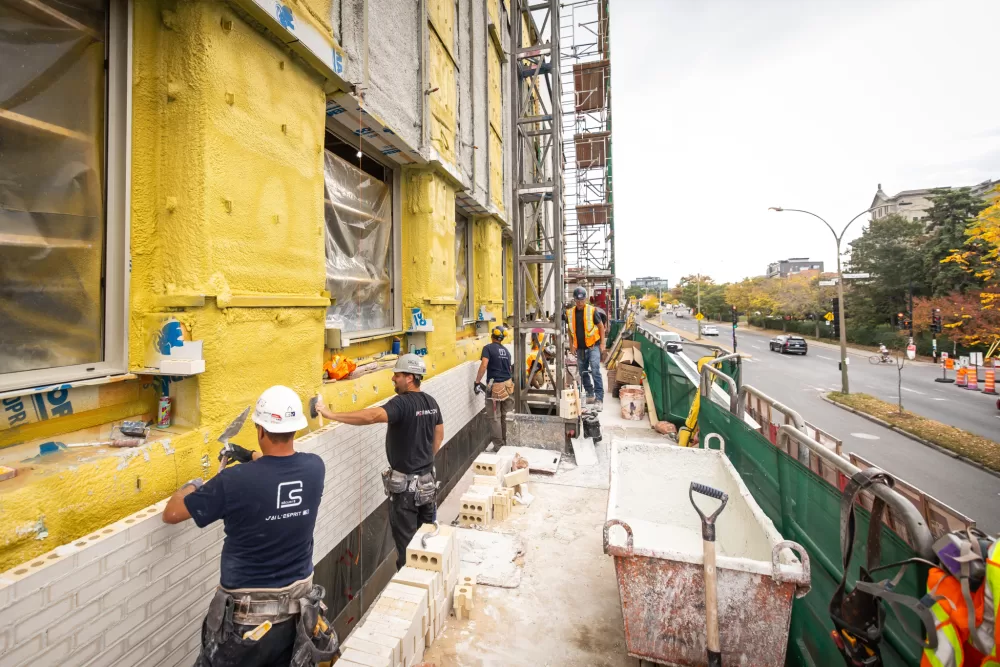
Given the impossibility of preserving the existing infrastructure on site, the team quickly turned to the use of responsible materials. The exterior cladding therefore incorporates a significant proportion of recycled brick, skillfully installed by Maçonnerie GY, helping to reduce the project’s overall environmental footprint. Material reuse also played a key role throughout construction, supported by rigorous waste management practices and the integration of eco-responsible equipment at every stage of execution.
A complex construction site in a dense urban environment
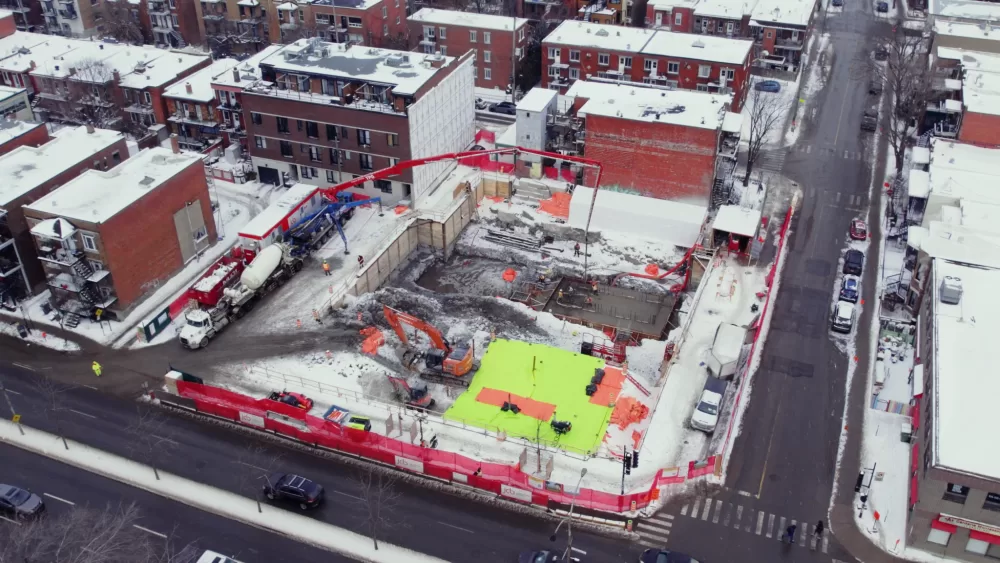
Located in the heart of Montreal, on a site occupying more than 80% of the available footprint, the project required exceptionally rigorous planning from its earliest phases, supported by BIM modeling.
One of the major challenges was the installation of geothermal wells directly beneath the building footprint. In this context, managing the geothermal system during construction also represented a significant technical challenge, particularly due to the excavation depths carried out by Excavation Patrice Couture and the need to protect underground installations.
This complexity was further amplified by the presence of an exposed timber structure, which required careful integration of mechanical and electrical systems in order to preserve both system performance and architectural quality. Routing of ducts and services therefore demanded precise coordination, particularly when penetrating beams, where close synchronization between structural and mechanical teams was essential to ensure performance without compromising the integrity of the wood.
The site was executed to high environmental standards, including the use of electric equipment, sorting and recovery of materials, strict waste management, and a strong focus on reducing disturbances to the surrounding neighborhood.
Despite the constrained site and dense urban context, this rigorous planning helped limit impacts on the surrounding community, particularly during demolition and excavation phases. The BIM approach played a decisive role in ensuring full control over all project stages, from demolition through to architectural completion.
The result is a precise, efficient, and fully controlled execution, despite the complexity of the urban and technical context.
A human collaboration at the heart of success
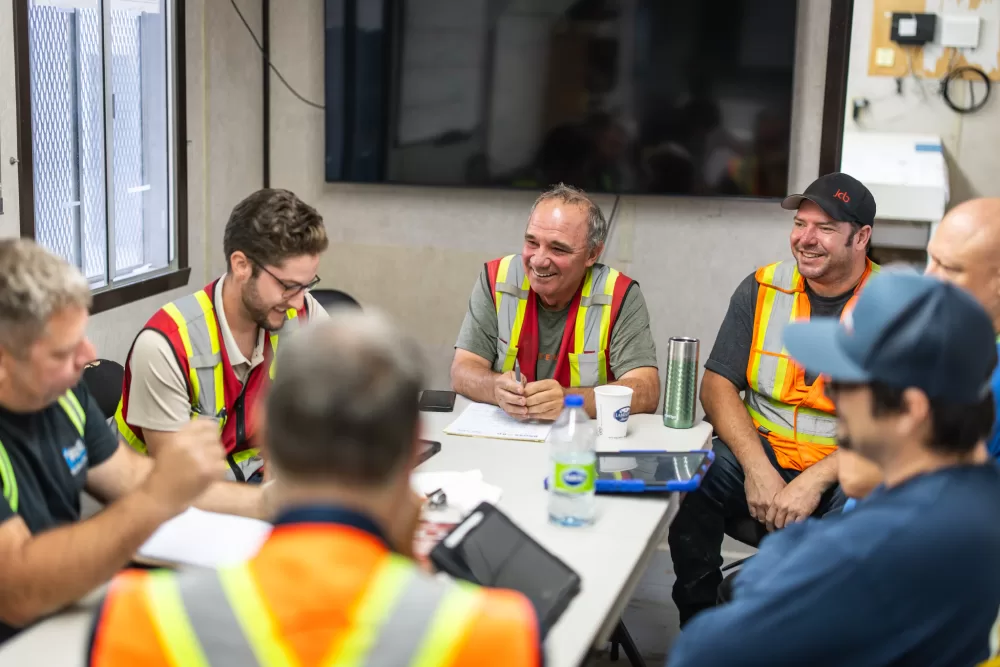
Beyond the technical aspects, this project is built on close and exemplary collaboration between all stakeholders: professionals, subcontractors, suppliers, and the client team.
All shared a common ambition: to deliver a building that is useful, sustainable, and meaningful.
Already recognized by the Association de la construction du Québec, which awarded it the 2026 Construire Award – Sustainable Development category, the Sun Youth community and sports center stands as a benchmark in carbon-neutral construction, BIM modeling, and mass timber use in Quebec. The project demonstrates that technical innovation, environmental performance, and social impact can be successfully combined in a single achievement.
Far more than a building serving functional needs, it embodies a new way of building in service of the community.
A heartfelt thank-you to all our partners!
Legico; Kanva Architects; BPA; Leroux Cyr; Nordic; Excavation Patrice Couture; Maçonnerie GY; Repentigny Électrique; Groupe C&G Beaulieu; JP Installations; Demospec; Coffrage Évolution; MG Construction; Vitrerie SB; Leroux+Cyr; Ascenceurs Vertec; Hub Assurances; AEC; Thermotech; Paysagement Ste-Marie & Frères; Parquet Deluxe Lasalle; RCM Architectural; Isolation Algon 2000; Revêtements Muraux Spec; Céramique Prestige; Lanctot Couvre-Sol; ProFab 2000; Vinac Construction; Mécanique RH; Cométal; Les Peintres Liberté; Lafarge; Lefebvre & Benoit; Équipement MCF