BIM approach at JCB: how 3D modelling can transform the pharmaceutical industry
3 min.
The Delpharm Project: A Strategic Infrastructure Construction Site
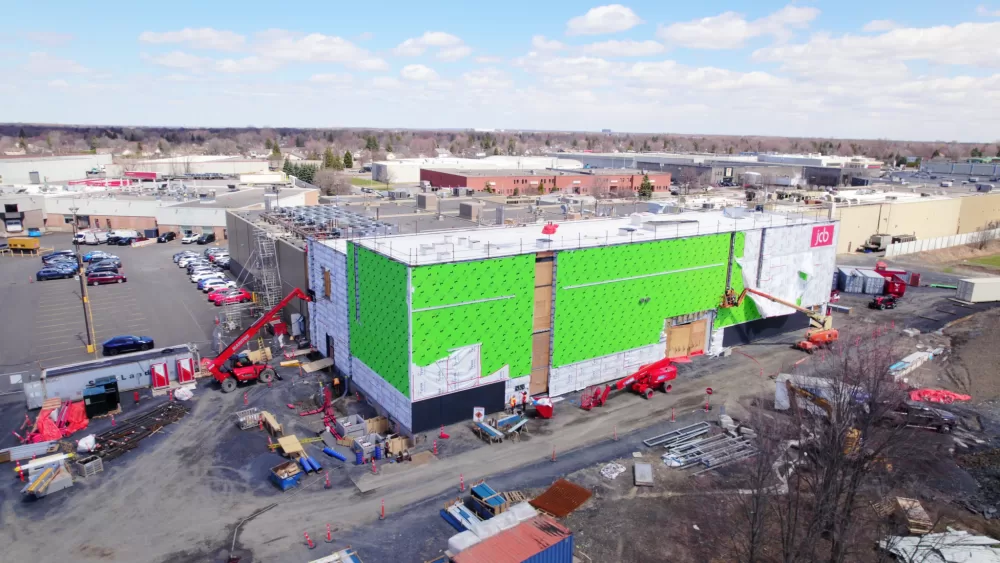
Located in Boucherville, the Delpharm plant holds a unique position in the Canadian pharmaceutical landscape. It is the largest production site for injectable medications in the country, with a mission to ensure a continuous supply of critical drugs used in operating rooms and intensive care units across Canada. As an indication of its importance, the facility currently manufactures 20 of the 100 medications classified as priority by the Canadian healthcare system.
In response to growing demand and the need to modernize its equipment, Delpharm launched a major investment program worth $220 million. Within this framework, JCB Construction Canada was selected to oversee the expansion work: a 15,000-square-foot extension will be added to the existing 100,000-square-foot facility. The scale of the project has also attracted significant government support, with contributions of $60 million from both the provincial and federal governments.
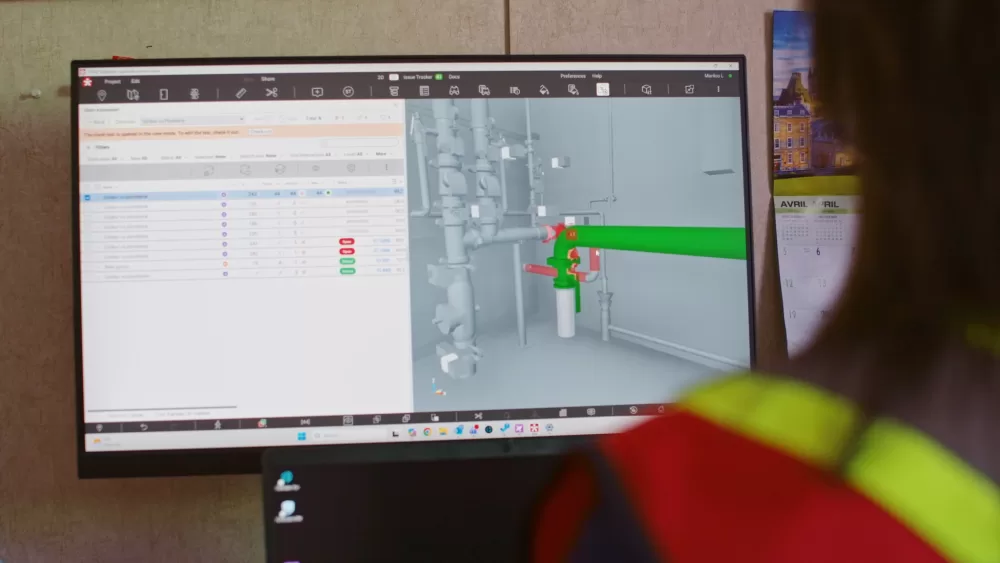
What is BIM and why is it essential?
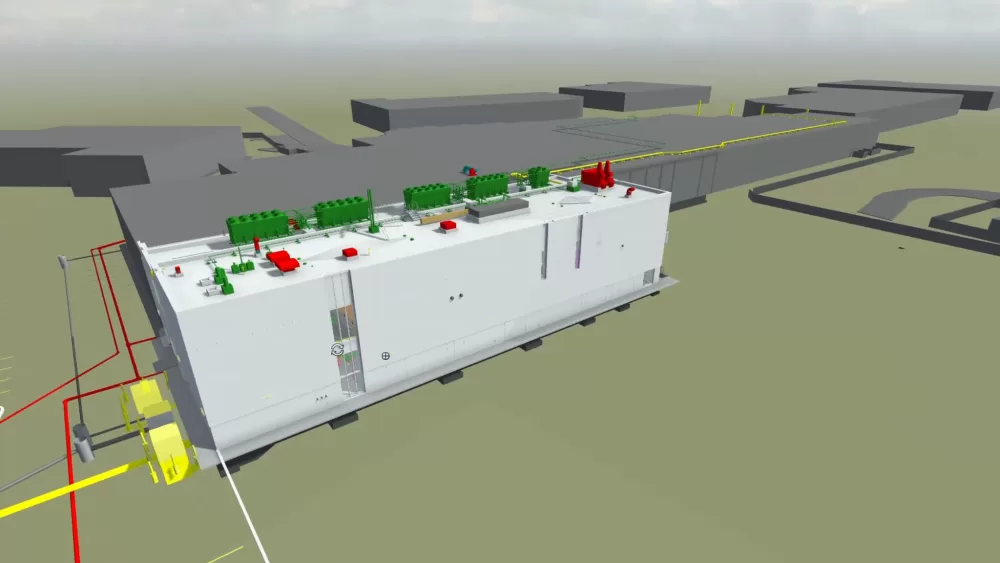
BIM, or Building Information Modeling, is a collaborative working method that involves creating a three-dimensional model of a building even before the first shovel hits the ground. Unlike traditional 2D drawings, BIM creates a digital twin of the project—a complete and detailed virtual representation that integrates all components of a building: structure, mechanical systems, plumbing, electrical, fire protection, and more.
This shared model becomes the single reference point for all project stakeholders: clients, architects, engineers, subcontractors, and site managers all work from the same digital source of truth.
BIM applied to the Delpharm project: a major challenge
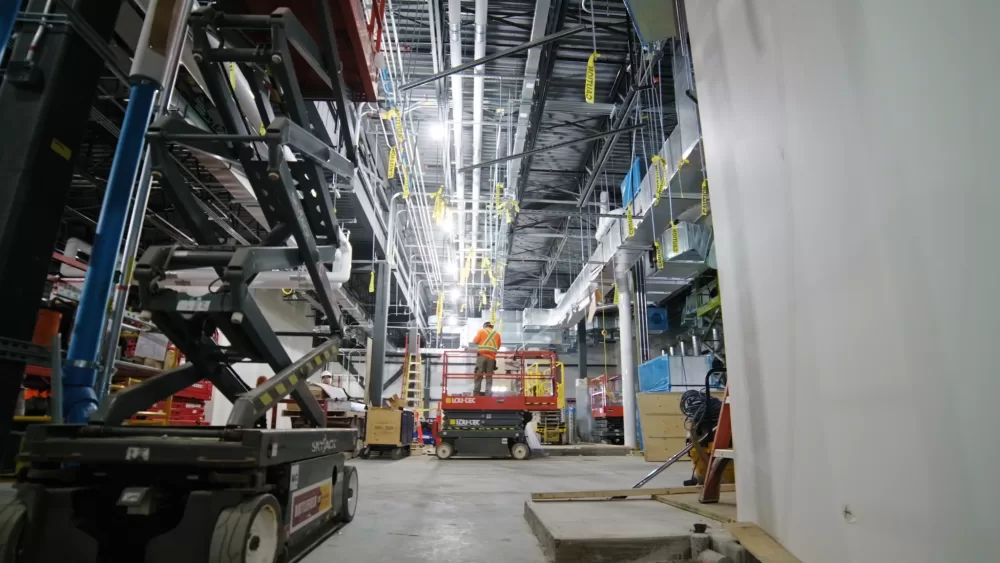
The expansion of the Delpharm plant in Boucherville, dedicated to the production of pharmaceutical products, is an exceptionally complex project. Within a limited space, the density of mechanical, electrical, and plumbing systems is particularly high. Every square foot matters, and even the smallest coordination error can lead to costly rework and significant delays.
It is precisely in this context that BIM demonstrates its full value. By modeling the entire project in 3D from the design phase, the team at JCB Construction Canada was able to identify and resolve system conflicts virtually, before anyone even set foot on the construction site.
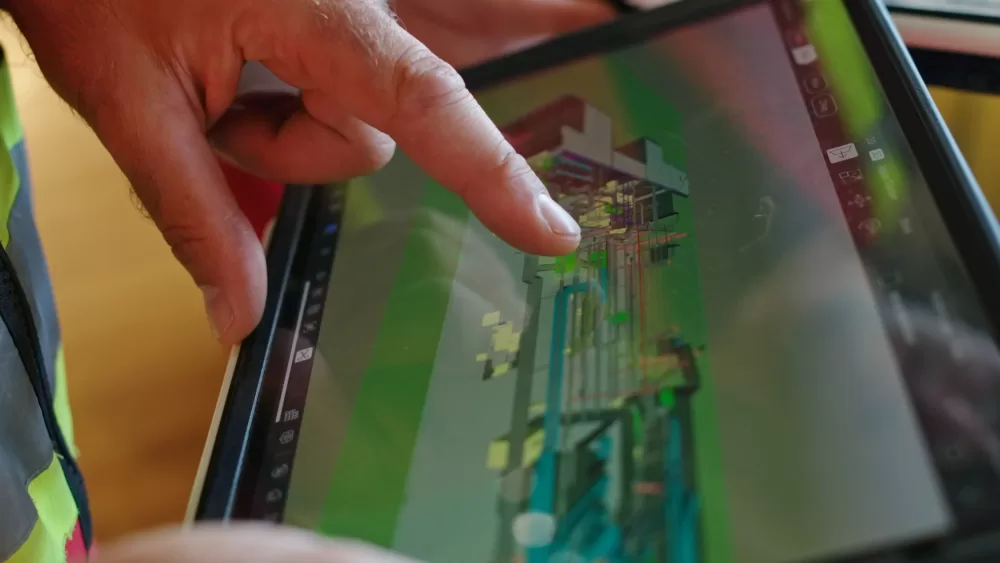
The three main advantages of BIM
1. Improved collaboration among all stakeholders
BIM places collaboration at the center of the construction process. Through a shared, continuously updated 3D model, architects, engineers, specialty contractors, and site teams work in perfect synchronization. Decisions are made more quickly, exchanges are better documented, and the risk of misunderstandings is significantly reduced.
2. Early detection of conflicts before construction
One of the most tangible benefits of BIM is the ability to detect clashes between systems before construction begins. A ventilation duct intersecting a plumbing line, or a structural wall conflicting with an electrical panel, issues that would traditionally be discovered (and corrected at high cost) on site are now identified and resolved virtually in advance. On a dense project like Delpharm, this detection capability represents substantial savings in both time and resources.
3. Significant time and cost savings
Fewer on-site conflicts mean less rework, fewer unexpected stoppages, and better cost predictability. BIM directly contributes to meeting schedules and budgets, an essential advantage for clients operating in highly regulated sectors such as the pharmaceutical industry.
Revizto and augmented reality: bringing BIM to life on the construction site
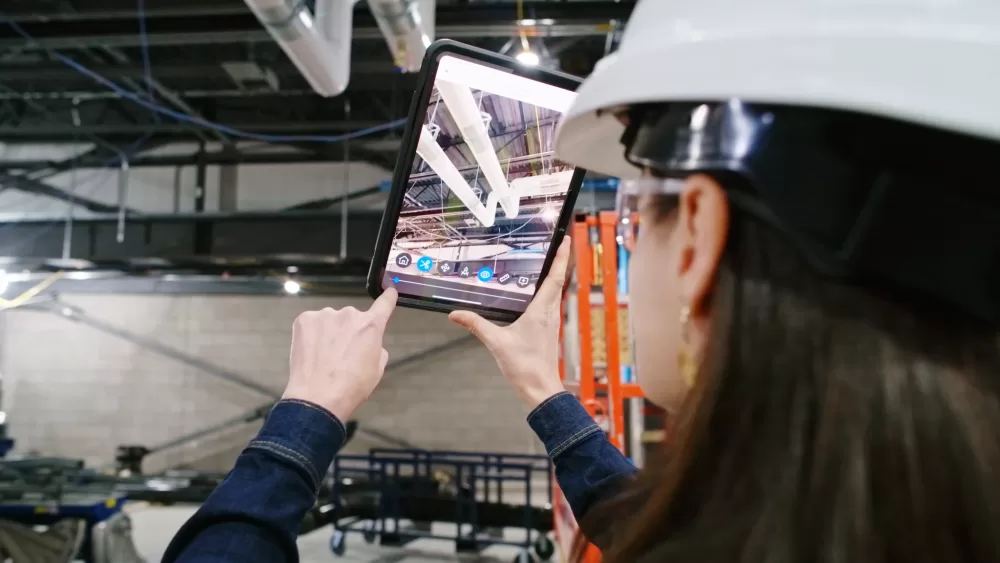
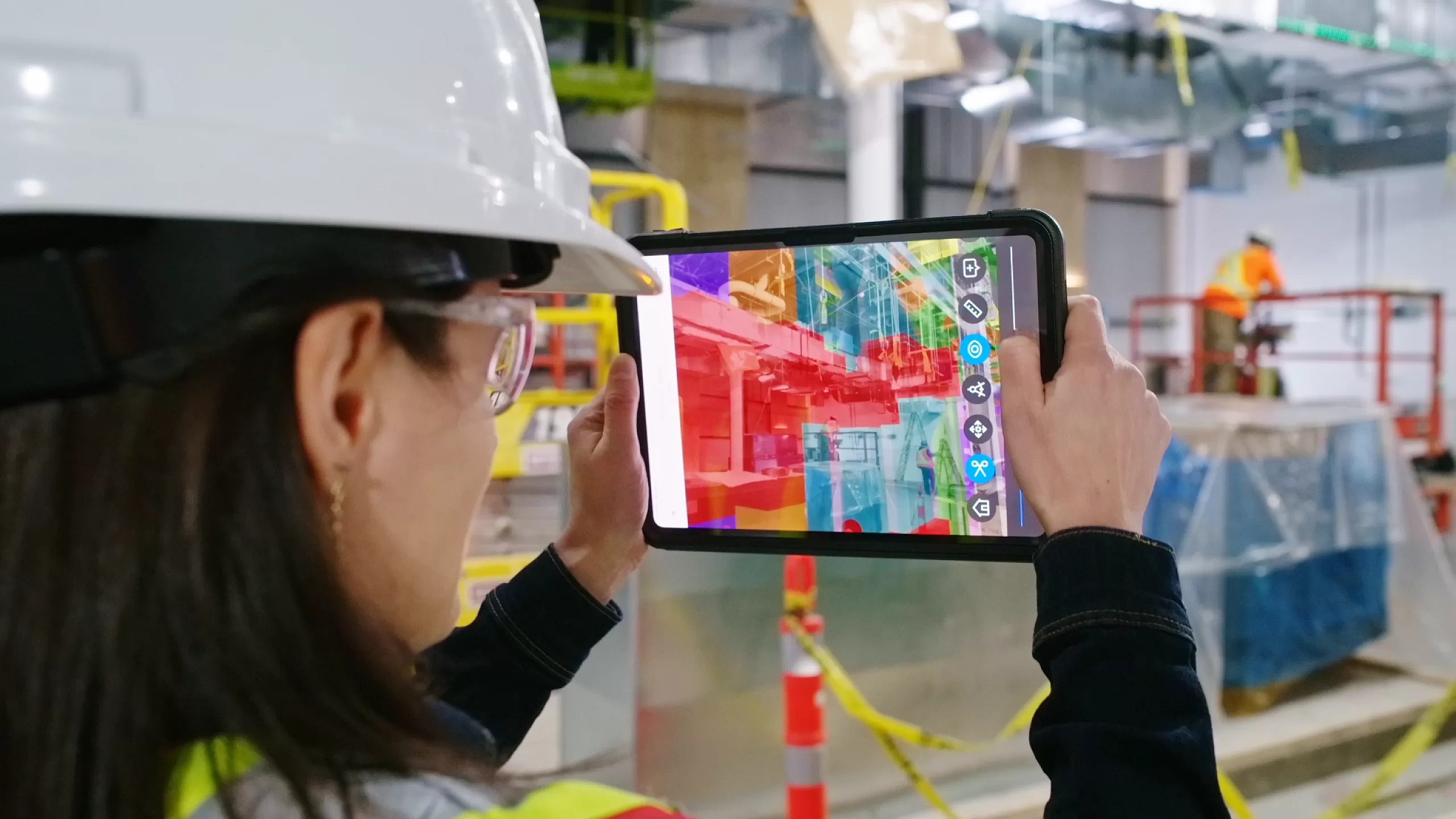
JCB Construction Canada is taking BIM integration even further through the use of Revizto, which allows 2D design drawings to be overlaid onto the 3D model to achieve an ultra-precise level of detail, directly accessible on the construction site.
Thanks to the Revizto mobile application, teams can use an iPad or smartphone to view the 3D model in augmented reality, superimposed onto the real-world site environment. What was previously difficult to interpret through abstract drawings becomes immediately visible and easy to understand on site.
A better-controlled project, from start to finish
The most visible impact of BIM on the Delpharm project is simple: fewer errors on the construction site and a better-controlled project at every stage. When all teams share a common vision of the project and that vision is anchored in a precise digital model, the quality of execution naturally improves.
JCB Construction Canada does not see BIM as just a technological tool, but as a true project management philosophy: anticipate rather than react, coordinate rather than improvise, and build with full control rather than hoping everything fits together correctly.